 Released: September 2, 1949 (UK)
Director: Carol Reed; Screenplay: Graham Greene based on his own novel; Cinematography: Robert Krasker; Music: Anton Karas; Producer: Carol Reed; Studio: British Lion Films
Cast: Joseph Cotten (Holly Martins), Alida Valli (Anna Schmidt), Orson Welles (Harry Lime), Trevor Howard (Major Calloway), Bernard Lee (Sgt. Paine), Wilfrid Hyde-White (Crabbin), Erich Ponto (Dr. Winkel), Ernst Deutsch (Baron Kurtz), Siegfried Breuer (Popescu), Paul Horbiger (Karl)
- “In Italy for 30 years under the Borgias they had warfare, terror, murder, and bloodshed. But they produced Michelangelo, Leonardo da Vinci, and the Renaissance. In Switzerland they had brotherly love, they had 500 years of democracy and peace, and what did that produce? The cuckoo clock…”
The superlatives that have been heaped upon this film are impressive. Most agree that The Third Man is the finest British noir ever made (some proponents of Night and the City might slightly disagree). Some feel that accolade does not do justice to the greatness of this film – they say that it is the finest movie ever made in the UK. A few admirers will even go so far as to argue that this effort from Carol Reed is the best movie that has ever been made, in any nation, regardless of genre or classification. While I won’t go so far as to back up that final assertion, I can’t dispute the first two. It _is_ the finest of all British noirs. And it is _is_ the best film to be made in the UK that I have seen (although I do love Reed's The Fallen Idol as well, but no longer consider it The Third Man's equal). It is a complete master class in filmmaking, possessing all of the ingredients necessary for a great film. An enigmatic story and screenplay from the great Graham Greene provides the template for the talent. The acting is on-point throughout. The direction of Sir Carol Reed is damn near perfect. And the visuals and atmospherics that Reed worked to create with Robert Krasker are now legendary in the history of cinema.
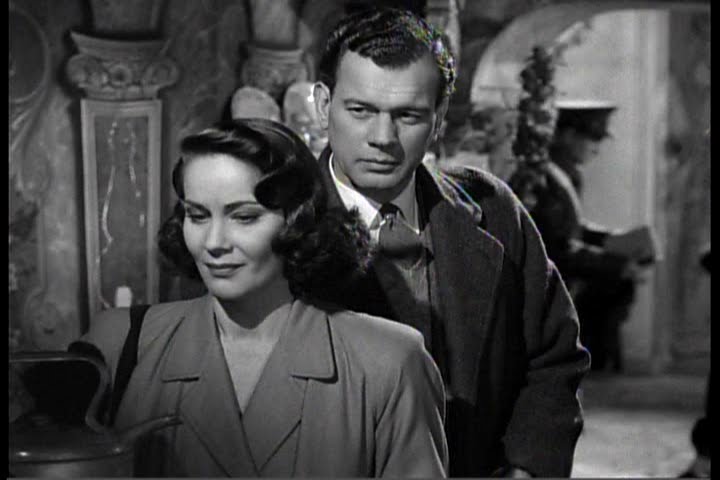
The story is likely one that everyone is familiar with. Holly Martins (Joseph Cotten) is an American writer of pulp western novels who travels to postwar Vienna at the behest of his friend Harry Lime (Orson Welles). When he gets to Vienna, Holly is stunned to learn that Harry has recently died. While attending his friend’s funeral, Holly bumps into Major Calloway (Trevor Howard), who warns Holly to leave Vienna and forget his old pal. Now even more intrigued, Holly decides to delve into the circumstances of Harry’s death and try to uncover what actually happened. The official story was that Harry was accidentally struck by a fast-moving automobile, but Holly is suspicious. Getting close to Anna Schmidt (Alida Valli), Harry’s former girlfriend, Holly is introduced to the cast of characters that last saw Harry before his death. The deeper his investigation goes, the more convinced Holly becomes that there was another witness – a “third man” – that has not come forward and might know more about the “accident” that killed Harry. At the same time, Major Calloway begins to give Holly clues about the type of person that Harry became, continually encouraging Holly to forget about him and leave Vienna. Holly soldiers on in his quest to vindicate his friend, but in the process uncovers something even more horrifying.
Greene’s story really is a treasure, as the majority of the film centers on an intriguing mystery, while eventually making that same mystery almost secondary. As the movie progresses, solving the mystery becomes less important than examining the bonds of friendship. How strong are such bonds? When do moral obligations trump a lifelong friendship? Holly wants desperately to believe that Harry is the same old pal that he has always known. As more facts concerning Harry’s activities are revealed to him, Holly still cannot accept the fact that his friend has turned into a human piranha. Holly feels that he has to vindicate his friend. When he finally comes face-to-face with Harry and tries to get answers, the friendship is strained to the limit.

This is another instance where rumors have continually swirled about Orson Welles actually having a role in directing. Certainly there are visual flourishes that one could picture Welles pulling off. But from everything that I have read, with both Welles and Carol Reed speaking on the topic, he definitely did not direct any part of the film. Welles only became attached to the project as an actor because he was strapped for cash in trying to make his own film. Which means that Carol Reed and Robert Krasker deserve all the praise in the world for the visual style of this film. It is an absolute landmark in cinematography and camera work. The surreal, slanted camera angles are the perfect counterpoint to the distorted, crooked machinations of the lead characters. The photography, with the starkest differences in lights and darks that one will see in noir, is as impressive as any film that will be included in this countdown. The scenes of the famed sewer chase are iconic – even people who are not familiar with The Third Man are likely to recognize the individual frames taken from that sequence.
But it is not just the visuals. The actors involved shine as well. Although he is on-screen for less than half of the film, the shadow of Welles’ Harry Lime hangs over everything, both literally and figuratively. The revelation of Harry standing in the darkened doorway, a sly grin across his face, is one of the great introductions of all time. Welles makes his limited time count, creating such a charmingly diabolical personality for Harry that the viewer almost hates the fact that they have to dislike him. The monologue at the beginning of this write-up was not actually in Greene’s screenplay and was famously added by Welles himself during filming. Regardless of its historical veracity or lack thereof (evidently Switzerland actually _was_ a military power at one point? Who knew…), it is a brilliant bit of writing and is delivered flawlessly by Welles. In another great historical irony, Welles was offered the option to take a salary for his work or be paid in a share of the movie’s profits. Needing the money, he chose the former. The movie then of course went on to be a huge success, costing Welles untold amounts of money. Such was his luck when it came to movies and finances. One also cannot overlook the contributions of Welles’ longtime collaborator Joseph Cotten, who played the sophisticated everyman as well anyone (Jimmy Stewart included). The assorted cast of Harry’s associates also turns in impressive work, as does the great Trevor Howard.

I’ll bring this one to a close now, just so it doesn’t look like I’m giving this movie more coverage than other entries – this is already one of the longer essays penned for the countdown. And yet, I still didn’t get to all of the key attributes of this great film – how can one overlook the unforgettable zither score from Anton Karas? It is just another wonderful element in the overall experience. This is cinema at its best.


